Museum guest book: paper book or QR code?
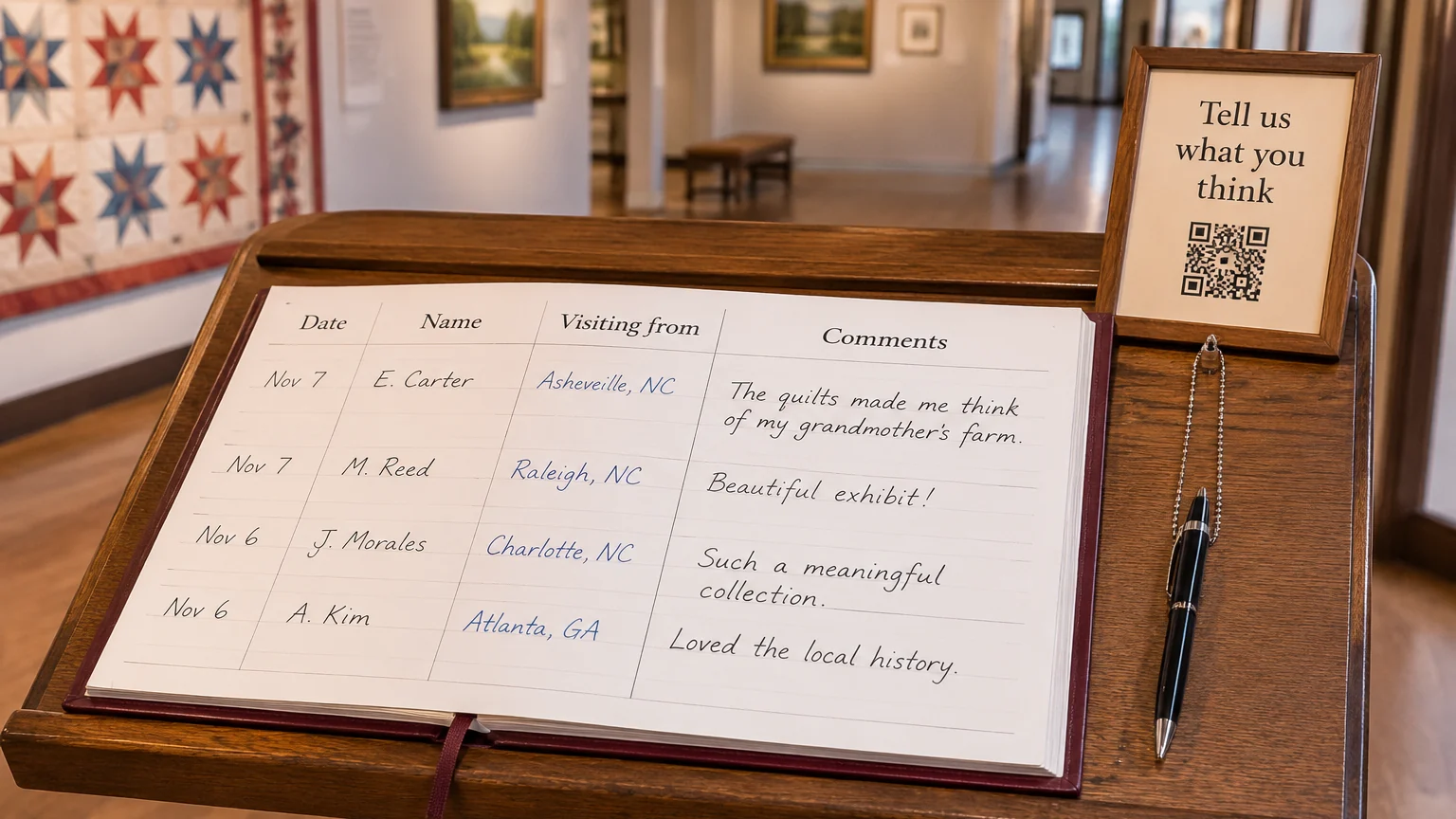
A museum guest book, often called a visitors’ book or a comment book, is where visitors leave their name, where they came from and a few words about what they saw. Put it near the exit of the exhibition, ask one good question at the top of each page, and keep a QR code beside it for visitors who would rather write on their phones.
What museums learn from the books
Comment books are more than a register of who came. The National Museum of Ireland, Country Life, studied the comments in its visitor books over the ten years after it opened in 2001, and found the same themes again and again: reminiscence, identity, ownership and emotion. Visitors wrote about their own grandparents’ farms as much as about the objects.
Some museums keep the books for good. The Brooklyn Museum Archives holds 171 volumes of visitor comments on exhibitions and gallery installations from 1977 to 2013, plus printouts of online comments from 2001 to 2013.
What to ask on the page
A blank page gets “Lovely!” and a signature. A question gets a sentence you can use. Print one at the top of each page, or set a small card next to the book:
- What will you remember from today?
- Which object stayed with you, and why?
- What should we show next?
- Did anything here remind you of your own family?
- What would you tell a friend about this exhibition?
Keep the columns simple: the date, a first name if they like, where they are visiting from, and the comment. “Where are you visiting from?” is the one column worth keeping on every page, because it tells you how far people travel to see you.
Where to put it
Put the book where visitors pause at the end of the exhibition, not at the entrance, when they have not seen anything yet. A slanted stand at standing height, good light and a pen on a cord do more than a nicer book.
For a temporary exhibition, give it a book of its own. The comments then stay with the show, which makes them easier to read and to file.
Privacy
An open book shows every earlier entry to the next visitor, and people write more about themselves than you would expect. The Brooklyn Museum’s archive notes that visitors sometimes left personal details in the comment books, so researchers may photograph the pages for reference but may not publish those photographs, and need permission to quote.
So do not ask for email addresses or home addresses in the guest book. A newsletter sign-up belongs on a separate card or form.
Reading and using the comments
Read the book every week, not once a year. Type up the comments that say something specific, note the date and the exhibition, and pass them to the curators. Quotes make good material for reports and social posts, as long as you ask the writer first or keep it anonymous.
When a book is full, label it with the dates and the exhibition and keep it. Ten years of books are a history of your visitors.
The QR code option
A QR code next to the book lets visitors write on their phones, in their own language and at any length. It suits museums with many international visitors, and families with children who prefer typing to handwriting.
A free online guestbook can do this: visitors scan the code and leave a message, and you can turn on review mode so nothing appears before staff have read it. Messages with links always wait for approval, as our features page explains. Our free printable signs include one with a square for your QR code, in the guide to guest book sign wording.
Keep the paper book too. Many visitors like writing by hand, and some never take out a phone in a gallery.
Quick answers
What is a museum guest book called? Visitors’ book, visitor book, comment book or guest book. Our guide to guestbook or guest book covers the spellings.
Should a small museum use paper or a QR code? Both, side by side. The paper book catches the visitors who will write a line on the way out, and the code catches the longer comments and the ones in other languages.